The global AI startup ecosystem has begun to enter its defining new phase. Once characterized by rapid experimentation, scattered innovation, and runaway funding cycles, this sector is now showing key signs of maturity. Leading the next generation of AI companies are ones born from corporate-backed accelerators, specialized venture arms, and a fast-rising technological frontier called agentic AI. This aspect of artificial intelligence refers to AI systems with capabilities for autonomous action, reasoning, and execution of multi-step workflows, all done with minimal human input.
The ecosystem is no longer venture-capital-driven, but rather it has moved to an era of strategic corporate participation at the center of what kinds of AI innovations scale globally, with giants like Microsoft, Nvidia, and CoreWeave now actively investing in or accelerating AI startups.
Corporate-Driven Acceleration: A New Power Center for AI Startups
It’s worth noting that corporate involvement in startup ecosystems is nothing new, but the scale in the AI sector is like nothing seen before. Today, companies in infrastructure provider roles—compute, cloud, chips, or developer tools—are extending their roles from supplier to strategic investor.
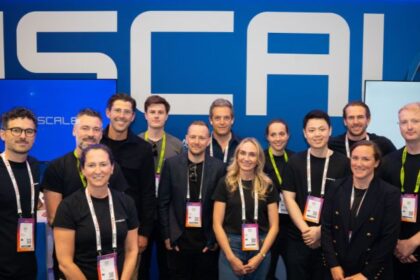
For instance, Microsoft and Nvidia recently launched a UK-focused accelerator that targets various agentic AI startups with compute access, technical mentorship, and early-stage funding. The initiative is designed to attract founders building the next wave of AI agents and autonomous systems. At a time when talent and GPU resources are scarce, such programs offer startups a crucial competitive advantage.
Similarly, CoreWeave, one of the world’s fastest-growing AI cloud infrastructure companies, announced the formation of CoreWeave Ventures, a corporate venture arm focused on early-stage AI investments. In addition to capital, CoreWeave provides startups access to its highly optimized GPU cloud, thereby allowing them to scale workloads and train complex models without the prohibitive upfront costs usually attendant to AI development.
Taken together, these moves reflect a clear strategic shift:
But corporations want a front-row seat in the AI innovation cycle-and the ability to influence which technologies will reach global scale.
The Rise of Agentic AI: The Next Platform Shift
Until now, large language models dominated the narrative of the first phase of the AI boom. Startups flocked to build wrappers, automation layers, and vertical applications. In 2025, however, a new frontier takes the main stage: agentic AI.
Autonomous decision-making
Understanding goals and constraints
Accessing tools and APIs
Performing multistep procedures
Interaction with digital systems on behalf of users
These are not just chatbots but digital workers that can independently complete workflows, which range from research and coding to customer support, logistics planning, and even financial operations. Industry analysts say agentic AI could become as transformative as smartphones or cloud computing, unlocking completely new business models and enterprise efficiencies.
Companies are strongly betting on this transition. Microsoft’s Accelerator is explicitly focused on “agentic-first” applications, and the contribution of Nvidia signals strong belief in the computational intensity and long-term relevance of autonomous AI systems.
The opportunity for startups is huge. Any company that can build reliable AI agents for industries such as healthcare, finance, retail, manufacturing, and marketing stands to capture enormous value.
Why the Ecosystem Is Maturing Now
Several forces are converging to accelerate this maturation:
Demand for Compute Efficiency
Running AI models, especially agents, requires huge GPU power. Corporate-backed cloud providers are uniquely positioned to support this.
Shift Towards Real Commercialization
The hype phase is over, and investors now want to see revenue, real customers, and sustainable business models. This is where corporate accelerators can provide immediate distribution channels and enterprise access.
Model Infrastructure Becoming Standardized
With open-source LLMs on the rise and foundational models beginning to stabilize, startups can focus their energies on building differentiated applications versus reinventing the wheel. Geopolitical Funding Priorities As nations like the UK, USA, UAE, Singapore, and India are aggressively pushing national AI strategies, corporations have moved to align their accelerator programs with them. A More Strategic, Sustainable AI Future The global AI startup ecosystem is making its way from chaotic hypergrowth to structured, strategic evolution.
Corporate accelerators and venture arms are the new launchpads for innovation, fast replacing traditional VC dominance in many areas. Meanwhile, agentic AI is extending the boundaries of what can be done by AI systems in a way that pushes startups to think beyond simple automation to full digital workforces. As 2025 unfolds, it is the interplay between the corporate infrastructure providers and the ambitious AI founders that will shape the next decade of progress in the field. The winners will be those with great technical foundations, access to modern compute, and the boldness to build agentic systems that transform fundamentally how the world works.