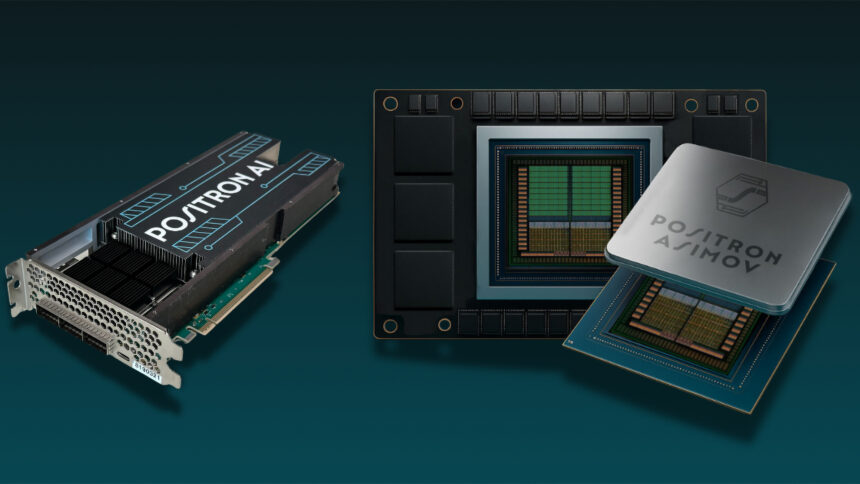
Positron is a company that is making a name for itself in the world of artificial intelligence. They are working on computer chips that can do the same things as the big graphics cards that are usually used for artificial intelligence. Positron started in 2023. Is based in Reno, Nevada. The people at Positron want to make it easier and cheaper to run the artificial intelligence models that are used today. They think their special processors can help with this by using energy and being simpler to set up. Positron is really focused on intelligence and making artificial intelligence chips that are better, than what we have now.
Funding and Growth
Positron just got a lot of money two hundred and thirty million dollars, from people who think they will do well. This means Positron is now worth over one billion dollars. Some big names, like Arm Holdings and the Qatar Investment Authority gave them money. This shows that these big names really believe in what Positron’s doing with their technology and think they will keep growing. The money they got will help them make artificial intelligence chips and memory technologies.
The investment surge in cloud providers. Ai companies is happening because they want other options besides the big GPU suppliers like Nvidia. Cloud providers and AI companies are looking for ways to spend money and make their systems work better when they are doing big AI jobs. Many technology firms are trying out hardware to see what works best for large-scale AI workloads, at cloud providers and AI companies.
New Chip Architecture and Technology
Positron is really good at making computer chips. These chips are made for artificial intelligence. They help artificial intelligence do its job better. This job is called AI inference. It is like when artificial intelligence takes what it has learned and uses that to make decisions.
Positrons chips are different from chips. Other chips, like GPUs can do lots of things.. Positrons chips are just for artificial intelligence. They are really good, at running language models and other artificial intelligence programs. This means they can do these things faster and use energy.
The company made a product called Atlas. Atlas is really good at getting things done. It works very well. It does a lot of things for the money you pay for it.. It uses a lot less energy than the old systems that use GPUs. The companys Atlas product is an improvement. Atlas is better, than GPU systems because it does more for the money and it does not use as much energy.
Positron is working on a chip called Asimov. This Asimov chip is different because it does not use the expensive memory that can handle a lot of information at the same time. The Asimov chip uses LPDDR5x memory instead. This kind of memory can hold a lot of information. It does not use as much power. Positron says that the Asimov chip can produce a lot artificial intelligence results for the same amount of money. The Asimov chip can make up to five times artificial intelligence results, per dollar. It also uses a lot electricity.
Industry Impact and Market Opportunity
The rise of Artificial Intelligence has created a huge need for more computing power. This is pushing data centers to their limits when it comes to energy and cost. Positron thinks that making memory work better and faster is very important for Artificial Intelligence applications. The main goal of Positron is to make Artificial Intelligence easier and cheaper for businesses, around the world to use.
The people who know a lot about this stuff think that the market for AI chips is getting into a stage. In this stage special processors might be used of the regular GPUs for certain jobs. The AI chip, which is made by Positron is designed to work with popular AI frameworks, like the ones that are used a lot. It can also be easily added to the existing software systems that are already being used. This makes it easier for big companies and cloud providers to start using the AI chip made by Positron. The AI chip is what makes this all possible.
Future Outlook
Positron plans to continue expanding its hardware ecosystem and is targeting production of its Asimov chips by 2027. If successful, the company could significantly reshape AI infrastructure by offering energy-efficient and cost-effective alternatives to traditional AI accelerators.