Bengaluru-based logistics startup Porter has let go of around 300-350 employees across various functions in what the company termed as part of a strategic restructuring exercise focusing on operational efficiency and long-term sustainability. The move also constitutes one of the major workforce cuts in India’s logistics-tech space this year, in line with the trend of startups reworking the cost structures amidst evolving market conditions and tightening investor expectations.
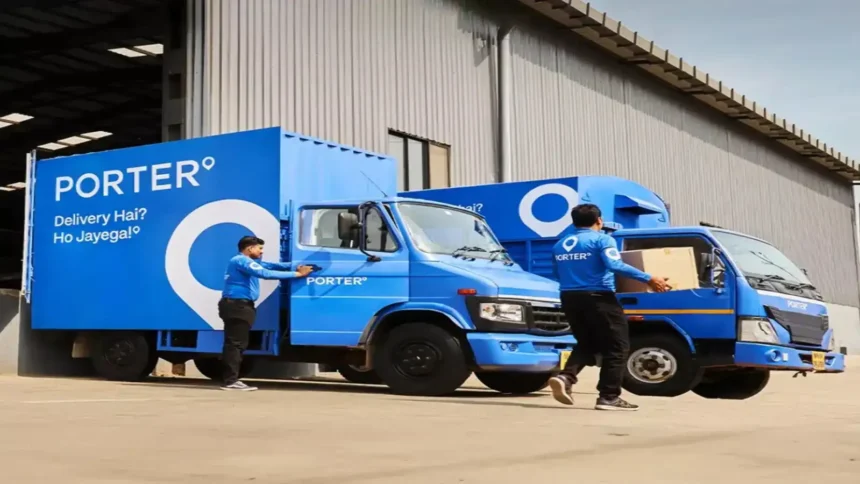
Founded in 2014, Porter has emerged as one of the largest intra-city logistics platforms of India, offering on-demand mini trucks, two-wheelers, and loaders for businesses and individuals. The startup has scaled operations in major cities and expanded into other services such as packers-and-movers solutions and enterprise logistics management. But this company now looks to balance growth with profitability, a shift partly because of the pressure due to macroeconomic factors and goals of internal reorganization.
A Move Toward Sustainable Growth
In a statement regarding the layoffs, a Porter spokesperson said the restructuring was necessary to ensure “long-term resiliency and scalability” for the company. “We are adapting to the current business environment, streamlining our operations and positioning ourselves for sustainable growth. Unfortunately, this restructuring exercise has impacted some roles. We are committed to supporting affected employees through this transition,” a spokesperson said.
The layoffs reportedly cut across operations, sales, supply-chain coordination, and some support functions. While Porter has not officially announced the exact number of reductions, sources close to the development have confirmed estimates between 300 and 350 employees.
This restructuring comes in a time when costs of logistics, variability in fuel prices, and fluctuation in demand have put pressure on companies engaged in last-mile and intra-city transportation. Competition has further increased with players like Dunzo, Delhivery, Shadowfax, and Swiggy-owned delivery fleets, putting logistics startups under additional pressure to improve efficiency and unit economics.
A Sector Rebalancing for Profitability
The layoffs at Porter reflect a broader trend across India’s startup ecosystem, where companies, especially in their mid-to-late growth stages, are now focusing more on profitability than aggressive expansion. A number of well-funded companies in sectors such as edtech, fintech, mobility, and ecommerce have announced restructuring efforts over the past two years as funding sentiment globally has gone cold.
This means that, unlike in previous phases when startups were looking to scale rapidly and capture markets, the new environment calls for tighter financial planning and clearer business sustainability. Logistics startups, analysts say, are more pressured because their businesses are infrastructure-heavy and operationally intensive, which demands better utilization of fleets, reduction in idle capacity, and overhead costs.
“Logistics is one of those sectors where efficiency directly impacts margins. For players like Porter, streamlining the workforce and improving automation is often a strategic call rather than only a funding pressure response,” said a supply-chain industry expert.
Employee Support Measures and Transition Assistance
Porter said it was offering severance packages and employment support for the laid-off workers, including job placements through its industry networks. Though the company refused to disclose the details of severance benefits, internal sources said the company was extending the notice periods and compensation policies in line with company norms.
This move reflects a growing realization among Indian startups of the necessity to approach workforce reduction with empathy, especially in a market characterised by regular layoffs in tech, logistics, and ecommerce.
The Road Ahead for Porter
Despite the reduction in the workforce, Porter’s leadership remains quite optimistic about the company’s future. The startup will continue investing in automation, route-optimization technologies, and enterprise logistics solutions-all areas expected to drive efficiency and revenue growth. Porter could further refine its geographic strategy by investing more heavily in high-volume markets while reducing operational complexity in underperforming territories.
Industry observers believe this restructuring could place Porter in an even stronger position to pursue eventual public listing plans. Indeed, a number of reports in the past two years have suggested that the company has been getting ready internally for possible IPO plans once the market conditions stabilize.
Conclusion Layoffs at Porter point to the changing priorities of India’s logistics and startup ecosystem, wherein companies are shifting focus from aggressive scaling to operational discipline, which makes workforce restructuring an unavoidable part of aligning business models with sustainable growth. Though it may be difficult for impacted employees in the short term, Porter’s recalibration could be what ultimately fashions a more resilient company, better positioned to play in the complexities of India’s fast-moving logistics landscape.