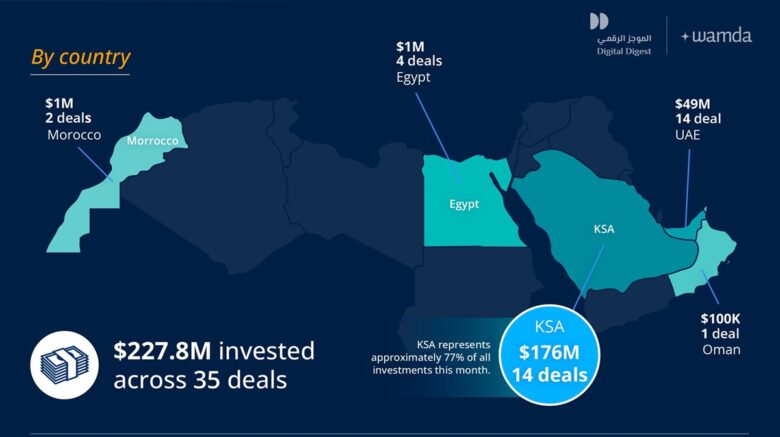
The startup funding environment in the Middle East and North Africa (MENA) region took to a more cautious approach when it was closing out 2025 which is a reflection of the worldwide venture capital activity slowdown. In the long run, the region still has a lot of potentials but the investors at the year-end had already changed their ways by putting financial fundamentals first before the rapid expansion and speculative growth. MENA startups faced throughout the year 2025 fewer deals and smaller funding amounts, especially in the early and mid-stages.
The late-stage rounds were getting more stringent in the selection of the recipients in that the capital was being directed towards those startups that showed the clearest visibility of revenues, the strongest governance, and the best routes to profitability. This has been a transition from the aggressive funding years of past when sustainability was far down the list of priorities and growth and market capture were the king. There was a slowdown but the ecosystem was not dead or inactive. The areas like fintech, enterprise SaaS, logistics, health tech, and climate tech were still backed up with investors, particularly the ones that are fighting region-specific problems like financial inclusion, supply chain efficiency, and energy optimization.
The countries, the UAE, Saudi Arabia, and Egypt, were keeping their status as the leading hubs taking advantage of the government-supported innovation activities, sovereign investments, and better regulations. The investors in the Middle East and North Africa were preferring the start-ups with good unit economics and cash-efficient. The start-ups were rather enticed to increase their lifespans, cut costs, and concentrate on their primary sources of revenues than on the heavy marketing that spreads out far and wide. A large number of companies’ leaders have changed their direction by moving towards mergers and acquisitions, strategic partnerships, and government agencies or large corporations contracts since these are the ones that provide long-term stability.
Another defining trend of late 2025 was the rise of alternative funding structures. With venture capital becoming more conservative, startups explored revenue-based financing, strategic corporate investments, and regional family offices. These funding sources, while often slower, provided patient capital aligned with sustainable growth rather than short-term valuation spikes.
Government initiatives continued to play a stabilising role in the MENA startup ecosystem. Saudi Arabia’s Vision 2030 programs, the UAE’s innovation incentives, and Egypt’s growing digital economy reforms helped maintain founder confidence despite the funding slowdown. Policymakers positioned startups as critical drivers of job creation, digital transformation, and economic diversification, reinforcing long-term support even as private capital tightened.
Looking ahead, industry observers believe the cautious end to 2025 may ultimately strengthen the region’s startup ecosystem. The correction is expected to filter out weak business models while enabling resilient, execution-focused startups to emerge stronger. While funding momentum may remain measured in early 2026, the MENA region continues to be viewed as a strategic growth market with solid fundamentals, increasing global interest, and a maturing entrepreneurial mindset.