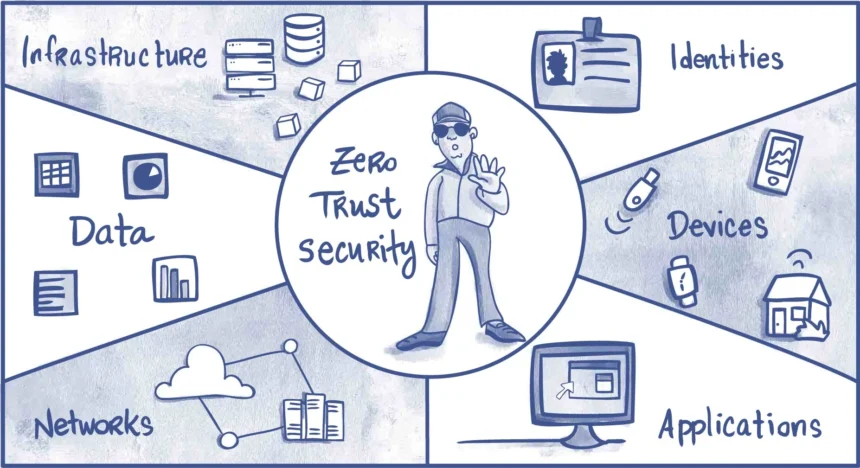
A rapidly growing startup in the cybersecurity space has introduced a comprehensive zero-trust security platform that will enable enterprises to secure their digital assets in the age of cloud computing, work from home, and sophisticated cyber threats. The platform will help enterprises ditch the conventional security perimeter in favor of the newly introduced identity-based security that always verifies identities before granting access.
This comes at a time when companies are finding it difficult to protect distributed IT systems. This could be attributed to the fact that employees are connected to different systems from various sites and devices. As such, network protection mechanisms are less effective. Large-scale data breaches and ransomware attacks have also made it clear that traditional network protection systems are inadequate. They are based on the idea that one should trust once connected to the network. The startup’s approach to zero trust network architecture takes the approach of “never trust, always verify.”
Continuity of Identity Verification
Authentication and authorization of user and devices wanting to connect to business applications happen in real-time. The process involves various parameters such as user credentials, posture of the devices, geographical location, behavior patterns, and risk levels. The process makes it difficult for hackers to use lateral movement as a means to attack organizations. Lateral movement attacks occur in advanced attacks.
Its service is also highly compatible with current enterprise infrastructure, including cloud, on-premise, and third-party applications. This will provide organizations with the ability to embrace a zero-trust architecture on a piecemeal basis, without needing to overhaul their current security infrastructure. The approach is also compatible with current identity, endpoint detection, and security information, as well as event management.
One of the major features of this framework is that it emphasizes least privilege access. The users are provided with no more than the required level of privileges to accomplish their jobs, and their privileges are repeatedly evaluated. If there is any variation between the normal behavior of a user, for example, if he or she tries to accede to critical resources at irregular times, this framework has the capability of limiting or escalating the requirements for further verification.
The startup has also integrated advanced analytics and AI capabilities into this framework. Machine learning algorithms assess user behavior and network activity to detect anomalies that could be an indication of compromised user accounts or insider threats. The solution detects anomalies in endpoints, apps, and cloud workloads and alerts security teams so that they can take immediate action.
In regard to the business aspect, the zero-trust model is meant to facilitate security operations while enhancing security at the same time. There is a lack of cybersecurity experts in most large companies today, which necessitates the use of automation and smart controls. The company asserts that initial adopters experience fewer incidents related to security as well as faster response times to incidents, along with better adherence to industry regulations.
“The framework is most applicable in sectors such as finance, healthcare, e-commerce, and technology, where data security regulations make it imperative for organizations to have zero trust. With increased momentum in digital transformation, zero trust is poised to become the basis of all new developments in the field of cybersecurity, as an afterthought no longer.”
Looking ahead, the company has announced several plans. These include advancing the capabilities included within the framework by developing stronger cloud-native integrations, more support within Internet of Things devices, and policy controls with finer granularity. It is also contemplating alliances with managed security service providers to deliver to the medium-sized enterprise that lacks expertise. With evolving cyber threats, the launch of this zero-trust security framework is an indication of how organizations think about security in cyberspace. With a focus on continuous verification, intelligent access controls, and real-time visibility, this new company is positioning itself as one of the leaders in today’s world of cybersecurity. For organizations in today’s borderless world of cyberspace, zero trust is no longer an opinion, but rather becoming a requirement.