In a leap for India’s deep-tech ecosystem, two startups supported by I-Hub Quantum Technology Foundation at Indian Institute of Science Education and Research (IISER) Pune, have announced breakthroughs pertaining to quantum computing and secure communication technologies. The feat places India firmly among a select group of countries making tangible progress in the next frontier of computing and cybersecurity.
Reportedly, the two startups — QudraTech Innovations and Entangle Labs — have developed a 64-qubit quantum processor and a large-scale Quantum Key Distribution (QKD) network, respectively. The products of the two companies mark an important milestone for India’s efforts toward indigenization in quantum technology, which is going to revolutionize computing, communication, and national security.
From Research to Real-World Impact
Quantum technology has for a long time been an intense research area with hardly any practical applications, but India’s recent strides show how academic-industry collaboration can translate research breakthroughs into deployable technology. The startups, both incubated under IISER Pune’s Quantum Technology Innovation Hub, have been working in close coordination with the academic researchers and government agencies to bridge this gap.
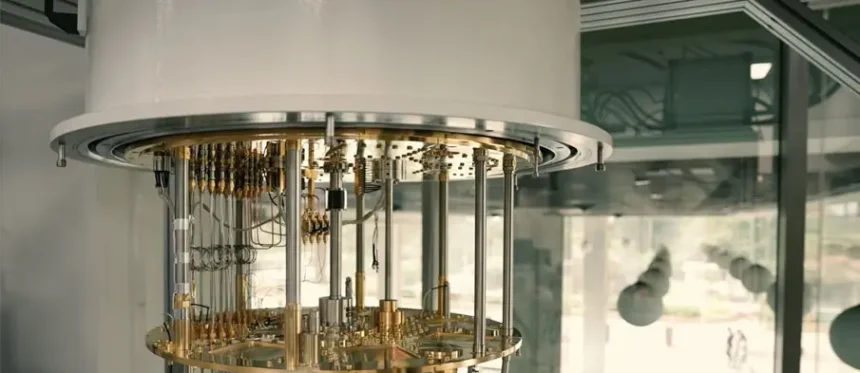
QudraTech Innovations is touting the new 64-qubit processor as India’s most advanced quantum chip. It leverages the combination of superconducting qubits and error-correction architecture in order to help solve complex problems that are beyond traditional supercomputer capability. Meanwhile, Entangle Labs’ QKD system successfully demonstrated secure transmission of encrypted data over a 300-kilometer-long fibre-optic network, for the first time in India, and will pave the way towards quantum-secure communications in defense, finance, and government applications.
“This is a defining moment for India’s deeptech sector,” Dr. Anil Kakodkar, the chairman of the steering committee for the Quantum Mission, said. “These startups show that India can lead in building secure and scalable quantum infrastructure, not as a participant but as an innovator.
India’s Quantum Push Gains Momentum
These are part of the larger strategy put forward by the government under NQM, which was launched in 2023 with an outlay of ₹6,000 crore. It aims at positioning India as a Global Quantum Hub by 2030, supporting R&D in quantum computing, communications, and material science.
DST is mentoring a set of startups, including QudraTech and Entangle Labs, through grants, access to laboratory facilities, and appropriate mentorship. The progress made here under the ecosystem of IISER Pune illustrates well the role that localized innovation clusters can play in creating breakthroughs on par with those created either in Silicon Valley or in Shenzhen.
“Quantum technology is not about faster computing alone,” says Dr. Ritu Sharma, director of I-Hub Quantum. “It’s actually redefining the way we create and maintain information security, optimize industries, and solve some of our toughest social problems. The startups we support are taking fundamental science into the real world.”
The Global Context
Quantum technologies have now emerged as a high-stakes competition among major economies of the world, including the US, China, and the members of the European Union. Technology giants like IBM, Google, and Intel are investing billions with the aim of achieving quantum advantage-the point at which quantum computers outperform classical ones for meaningful tasks.
However, India’s approach is different. It aims to build sustainable innovation, not merely the replication of Western models, by encouraging academic spin-offs and startup collaborations. According to analysts, this hybrid approach, balancing government funding with entrepreneurial agility, may just be the key to India carving a unique niche within the quantum ecosystem.
“India’s quantum startups are developing solutions tailored to local challenges, from secure communications for government agencies to next-gen encryption for digital payments,” said Dr. Rajeev Menon, a quantum computing researcher based in Bengaluru. “This focus on applied innovation gives them an edge in solving emerging markets, which global players usually overlook.”
Opportunities and Challenges Ahead
Still, experts caution that quantum is a long game. Hardware costs are high, there is a lack of quantum-ready talent, and not enough manufacturing infrastructure exists to scale these innovations. Yet the momentum appears sustainable, considering both an uptick in investor interest for deep tech and increased government backing.
A few VC firms, such as Pi Ventures and Speciale Invest, have started looking at quantum and photonics startups for investments. “India’s quantum moment is arriving,” said Manish Singhal, founding partner at Pi Ventures. “What is happening at IISER Pune shows that research-led startups can define the next decade of technology leadership.”
A Defining Step for India’s Deep-Tech Future QudraTech and Entangle Labs’ breakthroughs are not just about technology success but represent India’s evolution as an IT economy based on services to a deep-tech innovation powerhouse. As quantum computing and secure communication assume strategic importance across the world, the startups are positioning India as both a technological leader and a trusted partner in the global digital economy. As one IISER researcher aptly put it: “Quantum is not the future anymore—it’s the present. And India is now a part of that story.”