

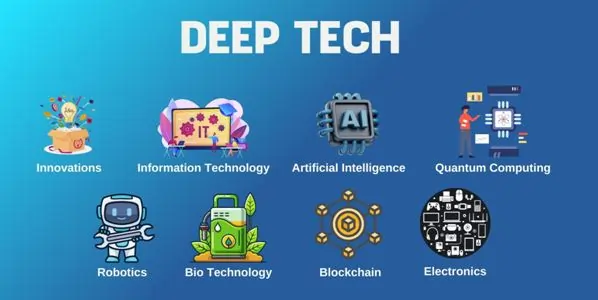
India’s startup scene is experiencing a structural shift, with venture capitalists and institutional investors increasingly focusing on deep-tech and infrastructure-led startups from consumer internet ventures. This is a critical turning point in the innovation saga of the country — a phase where long-term creation of technological value is prioritized above fast user growth and short-term valuations peaks.
In a recent report by The Economic Times, startup leaders such as Zerodha’s Nithin Kamath have pointed out an increasing investor interest in domains like artificial intelligence, semiconductors, hardware systems, and industrial automation. This shift is a new era for India’s digital economy as it adopts global trends in advanced technology and green infrastructure.
A Maturing Ecosystem Ready for Real Innovation
For almost a decade, India’s startup revolution has been led by B2C industries such as e-commerce, food delivery, and fintech. Flipkart, Zomato, and Paytm set the tone for an age of consumer-led growth. But as capital gets choosy and competition gets fierce, investors are now seeking opportunities that can bring deep technology innovation and global competitiveness.
Kamath pointed out that India is “entering a phase of maturity where deep-tech, clean energy, and advanced hardware businesses will fuel the next phase of growth.” This is in line with the increasing realization that genuine differentiation — and sustainable scale — are a result of proprietary technology and intellectual property as opposed to aggressive marketing or discount-led growth.
AI, Semiconductors, and Hardware Dominate the New Frontier
The surge in interest toward deep-tech has been particularly visible in AI-driven enterprises and semiconductor manufacturing. Startups such as Uniphore, Skit.ai, and LightMetrics are leading India’s AI revolution, developing solutions that compete on a global stage.
At the same time, the Semicon India initiative of the government, with its vision of transforming India into a world hub of chip design as well as manufacturing, has sparked both private and public investments in this sector. More than $10 billion of incentives have been set aside to fund semiconductor production, design startups, and supporting industries.
Hardware-oriented startups in fields such as drone tech, EV battery technologies, robotics, and climate tech are also attracting significant interest. Garuda Aerospace and IdeaForge, for example, have already established a track record with defense orders and overseas purchases, providing an example that will be followed by future Indian deep-tech exports.
Infrastructure Startups See a Parallel Rise
In addition to deep-tech, infrastructure startups — companies that work on intelligent logistics, green energy grids, and data center evolution — are gaining traction. As India’s economy grows rapidly and digital growth hits new heights, the need for stable physical and digital infrastructure is exploding.
Companies such as ElasticRun (logistics), ReNew Power (renewables), and CtrlS Datacenters (digital infrastructure) are examples of this transition. Their expansion shows how tech-enabled infrastructure plays can create stable revenues and address systemic national issues like connectivity, sustainability, and power efficiency.
The recent mega-funding of U.S.-based AI data-center firm Crusoe — raising $1.38 billion at a valuation of $10 billion — has also impacted Indian investors to seek similar opportunities locally. With cloud storage, AI computing, and enterprise automation growing, India’s infrastructure backbone will have to scale at an unprecedented rate.
Government and Policy Support Speed the Trend
Government policies like ‘Make in India,’ ‘Digital India,’ and the National Deep-Tech Startup Policy (NDSP) have played a key role in catalyzing this revolution. The NDSP, specifically, seeks to establish an in-depth support ecosystem for deep-tech founders — patent support, defense R&D collaboration, and tax support for high-tech exports.
In addition, India’s emphasis on green infrastructure and sustainability within its G20 commitments is driving energy efficiency, carbon capture, and smart city innovations. This convergence of policy, capital, and technology is building rich soil for long-term innovation.
Challenges Ahead — But Opportunity Beckons
Though the excitement regarding deep-tech and infrastructure is growing, the sectors are not challenge-free. Such startups usually have longer gestation times, greater capital intensity, and specialist personnel. Deep-tech startups are unlike app-based consumer businesses, which have limited reliance on research collaborations, hardware prototyping, and worldwide supply chains.
But experts contend that these issues also help construct good entry barriers, resulting in more defendable and globally competitive firms. With leading institutions such as IITs and IISc more strongly encouraging spin-offs and incubation, India is constructing the depth of ecosystem required to support deep-tech growth.
The Next Phase of Indian Innovation
India’s startup narrative is shifting from one based on consumer scale to one founded on technological depth and durability. As funding gets more disciplined, investors are focusing on those businesses that can innovate at the frontier — addressing sophisticated problems with meaningful impact.
Deep-tech and infrastructure startups’ growth indicates a mature ecosystem that acknowledges science-driven entrepreneurship, sustainable economics, and international ambition. With support from policy initiatives, capital flows, and increased international exposure, India is fast becoming a hub for deep technological innovation.


