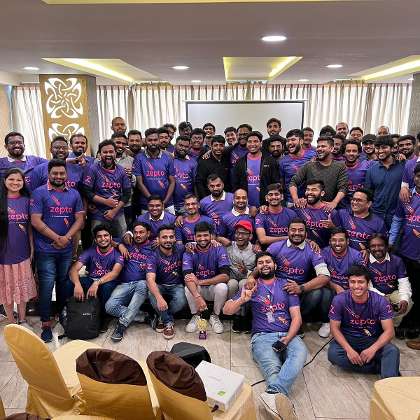
In a move that reflects the shifting priorities of India’s new-age startups, quick-commerce unicorn Zepto has announced it is relocating its headquarters from Mumbai to Bengaluru. Driven principally by the need to access deeper engineering and product talent, the decision underlines how tech ecosystems—not traditional business hubs—are increasingly shaping the future of high-growth firms.
Zepto, founded by Aadit Palicha and Kaivalya Vohra in 2021, has grown rapidly in the competitive 10-minute delivery space. What began as a hyperlocal experiment in Mumbai soon turned into a nationwide quick-commerce network. Yet, despite its roots in Mumbai and its large corporate presence there, the company believes its next phase of growth requires consolidation in India’s technology capital.
Why Bengaluru Makes Sense
The shift is rooted in a simple strategic truth: Bengaluru has the strongest concentration of tech and product talent in India. While Mumbai is a powerful commercial, financial, and consumer market, it does not offer the same density of engineers, developers, data scientists, supply-chain technologists, and product leaders that Bengaluru does.
That is reflected in Zepto’s own employee composition, too. Engineering and product teams were already predominantly resident in Bengaluru, while business, marketing and operations groups were stationed in Mumbai. This dual-city arrangement had gradually created silos over time. A consolidated HQ will eliminate these inefficiencies and consequently unify the organisation.
It is expected to shift into a facility almost double the size of its combined office footprint at present. Bengaluru’s tech corridors—HSR Layout, Bellandur, and Sarjapur—are strong contenders for this new campus, giving employees access to the city’s vibrant startup ecosystem.
Impact on Employees
The relocation is a big operation involving almost 1,700 to 1,800 employees, of whom around 1,000 are stationed in Mumbai. Thankfully, an overwhelming majority of the employees said they were willing to move, which just goes to highlight the fact that Bengaluru is a city of opportunities within the tech community.
Zepto has reportedly given support packages to ease the transition and relocation assistance. A small percentage of employees may opt out due to personal reasons, while the company expects minimal disruption overall. Opening up to better tech ecosystems, more networking, and greater learning opportunities for many employees is the positive consequence of this move.
Cost, Efficiency and Long-Term Planning
Beyond talent, the economics of the move also work in favour of Zepto. Bengaluru offers relatively lower commercial real-estate costs compared to Mumbai’s premium business districts. For a fast-growing startup requiring large collaborative spaces and tech-heavy infrastructure, cost savings from rent alone can be substantial.
As per estimates by company insiders, the move could save the company several tens of lakhs in operational expenditure every month. While there will be an initial one-time relocation expense, company leaders believe the long-term financial benefits far outweigh the short-term cost.
More importantly, this allows Zepto to remove friction in decision-making because it has all its teams—tech, business, operations, finance, and leadership—under one roof. In a competitive sector where speed determines survival, proximity and collaboration become important.
Why This Move Matters for Quick-Commerce
Quick commerce requires precision logistics, real-time data processing, and rapid experimentation. Every improvement—whether faster route planning, better inventory prediction, or algorithmic pricing—derives from strong engineering.
Therefore, companies in this space increasingly behave like technology companies, not retail or logistics firms. Zepto’s relocation signals a clear organizational identity:
It’s a tech-first company, and the headquarters need to reflect that.
With Bengaluru hosting India’s most advanced AI, mobility-tech, and SaaS ecosystems, Zepto has greater opportunities for partnerships, pipelines of talent, and collaborative innovation.
Competitive Landscape Advantage
Zepto’s decision also positions it strategically against competitors like Blinkit and Swiggy Instamart. While these companies have strong tech teams, Zepto’s unified Bangalore hub could accelerate product cycles and improve agility. In a market where consumer expectations evolve weekly, even small enhancements in delivery promise or app experience could significantly shift market share.
Anchoring itself in Bengaluru, Zepto is putting itself at the heart of India’s tech movement, flanked by unicorns, AI startups, cloud infrastructure firms and logistics innovators.
Challenges Ahead
Not all is easy, though-the challenges of relocation include assimilation of employees in a new city, the cultural adjustments, and the very fierce competition for top engineering talent in Bengaluru. While Bengaluru is rich in talent, it is also a fiercely competitive hiring environment.
Additionally, moving away from Mumbai means distancing the company from key business relationships, major media houses, and investor ecosystems that still operate strongly in the city. This would mean Zepto needing to have a satellite presence or a strong travel cadence to ensure continuity. Conclusion Zepto’s decision to shift its headquarters from Mumbai to Bengaluru marks an important moment in the Indian startup ecosystem. This is a sign of the rising importance of engineering-led growth and the increasing dominance of Bengaluru as the country’s tech nerve centre. To Zepto, the move is more than a change of address-it is a strategic pivot into aligning its identity, operations, and long-term ambitions with the needs of a tech-driven future.