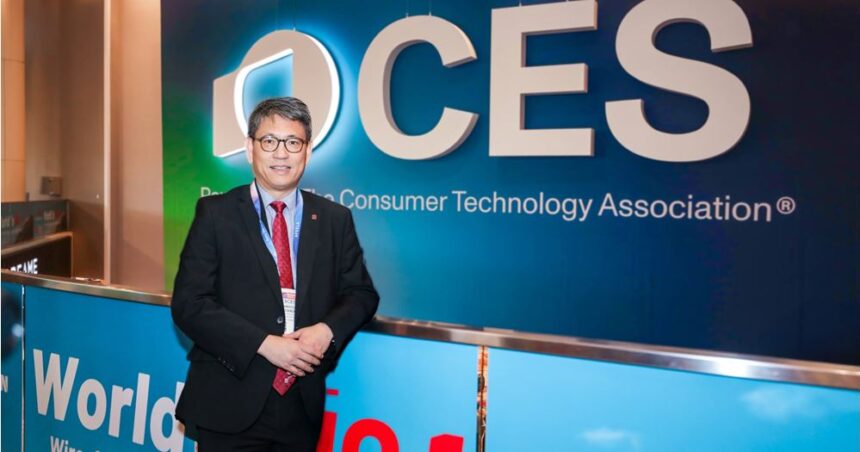
The global startup ecosystem sent a strong message to the world at CES 2026, as early- and growth-stage companies from across the globe exhibited groundbreaking innovations that demonstrate how technology will shape our future and how businesses can utilize technology to achieve sustainability and produce digital transformation. Traditionally, CES has been focused on the consumer electronics industry, but through the years it has transitioned to an important global venue for startups; CES 2022 was a watershed moment in that the emphasis was on innovation rather than company size.
Startups across artificial intelligence, robotics, climate tech, health tech, IoT, water technology, and enterprise SaaS drew significant attention from investors, policymakers, and global enterprises. Many young companies demonstrated not just concepts, but production-ready solutions, signaling a maturing global startup ecosystem that prioritizes execution and real-world impact over experimental prototypes.
One of the most prominent themes at CES 2026 was the dominance of AI-powered solutions. Startups unveiled advanced applications in predictive analytics, automation, smart infrastructure, cybersecurity, and generative AI for enterprises. Unlike previous years, the focus was less on novelty and more on measurable efficiency gains, cost optimization, and scalability, aligning closely with enterprise and government adoption needs.
Sustainability-driven startups also had a strong presence. Climate-focused ventures showcased innovations in clean energy management, smart water systems, waste optimization, and carbon monitoring technologies. Several of these startups received international recognition for addressing global challenges such as water scarcity, urban resilience, and energy efficiency—proving that impact-driven innovation is now a core investment theme rather than a niche category.
Another notable trend was the global diversity of startups at CES 2026. Founders from Asia, the Middle East, Europe, and Latin America demonstrated how innovation is no longer concentrated in a handful of regions. Indian startups, in particular, gained visibility with solutions spanning deep-tech, hardware-AI integration, SaaS platforms, and EV-adjacent technologies, reflecting India’s growing ambition to compete on a global technology stage.
CES 2026 also highlighted a strategic shift in how startups position themselves. Instead of chasing rapid exposure, many focused on strategic partnerships, pilot programs, and long-term enterprise collaborations. This approach resonated with investors and corporate leaders looking for resilient, revenue-driven businesses in a more disciplined funding environment.
Overall, CES 2026 reinforced a clear message: startups are no longer just participants—they are drivers of global innovation. With stronger fundamentals, practical applications, and global ambitions, startups at CES demonstrated that the next wave of technological transformation will be led not by scale alone, but by smart execution, sustainability, and real-world relevance.