The international Software-as-a-Service (SaaS) market, erstwhile hailed for its instant scalability and subscription model, is in the midst of a phase of high-level consolidation. With the artifical intelligence (AI) revolution transforming enterprise software, niche SaaS startups are increasingly struggling to stay afloat on their own. Stricter capital conditions, increased rivalry, and the increased price of winning new customers have prompted a wave of mergers and acquisitions as well as strategic partnerships for survival and scalability.
The New Reality for SaaS Startups
The SaaS industry, worth more than $250 billion in 2025, isn’t contracting—but it’s changing. With investors looking for profitability rather than growth and companies reassessing their technology spending, startups are finding it hard to hold their ground. The days of booming venture capital and quick customer growth are over, replaced by a time of capital discipline and measured growth.
Based on Tracxn and PitchBook data, SaaS funding across the world declined by almost 30% year-over-year in 2025, the largest drop since pandemic times. However, mergers and acquisitions in the space have doubled, with bigger players acquiring smaller, niche firms to consolidate product portfolios.
AI Adoption: The Double-Edged Sword
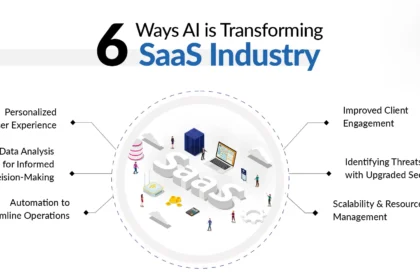
Artificial intelligence is both fueling innovation and speeding consolidation. Businesses that add AI capabilities to their SaaS applications—such as predictive analytics, automated workflows, and customer intelligence—are experiencing growing enterprise adoption. That said, the costs of development when implementing AI are high, particularly for smaller startups that don’t have strong technical or financial resources.
“AI is shifting the expectation of what customers want from SaaS offerings,” said BrowserStack Co-Founder Ritesh Arora. “It’s no longer sufficient to provide automation—you need intelligence, flexibility, and real-time insights integrated into your platform. For most smaller startups, that costs more capital than they can raise.”
Consequently, nascent companies without profound AI strengths or differentiation are being acquired by larger companies with the scale to onboard sophisticated models. Industry leaders such as Salesforce, HubSpot, and Zoho are at the forefront, acquiring AI-first companies to enhance offerings and deepen competitiveness.
The Funding Squeeze
Investor sentiment has shifted dramatically since 2023. Venture capitalists, once eager to fund SaaS ventures at high valuations, are now prioritizing sustainable growth and clear profitability paths. The result is a funding crunch for early-stage companies.
“Valuations that once looked normal in 2021 now seem inflated,” noted an Accel partner in a recent report. “We’re advising our portfolio founders to focus on customer retention, cross-selling, and operational efficiency rather than chasing growth at all costs.”
This transition is compelling startups to redefine their strategies. Numerous companies are going for mergers with complementary entities to consolidate technology and talent, dilute competition, and offer a consolidated proposition to customers as well as investors.
Regional Impact: India and Beyond
India, the world’s fastest-growing SaaS market, is also seeing the same phenomenon. While leaders such as Zoho, Freshworks, and Chargebee keep expanding, mid-size startups are experiencing exits via acquisition or merger as they see delayed deal cycles and prolonged sales closures.
“AI adoption has increased the entry barrier,” said Freshworks CEO Girish Mathrubootham. “To compete on the global stage, Indian SaaS firms have to focus on deep tech integration and global scalability, not product-market fit.”
Indian SaaS startups are also looking to secure strategic partnerships with US and European firms to gain access to AI infrastructure and enterprise customers. Consolidation in the ecosystem is reflected in the trends seen in Silicon Valley, where niche SaaS tools are being packaged into broader, AI-based platforms.
The Future: Platformization and Efficiency
As consolidation gains momentum, the SaaS market is heading toward platformization — a business model in which large, multilateral platforms bring several tools under a single ecosystem. Rather than employing distinct applications for CRM, project management, analytics, and communications, businesses like to have combined systems with AI-powered workflows and cross-functional visibility of data.
This transition benefits incumbent firms with the size to buy or absorb smaller ones. Survival for newcomers will rely on specialization, innovation, and quickness. Specialty players with one-of-a-kind vertical solutions—particularly around cybersecurity, data compliance, and generative AI—are still drawing investor attention, albeit at more realistic valuations.
Conclusion
The wave of consolidation in the SaaS industry marks the onset of a new era—where efficiency, intelligence, and integration into an ecosystem are more valuable than sheer growth. While disruption by AI presents challenges, it also brings unprecedented opportunities to those that respond quickly.
In this changing world, winners are those who use AI not as a feature but as a building block that reshapes how software is constructed, delivered, and scaled. The rest, it appears, will become part of history—literally.