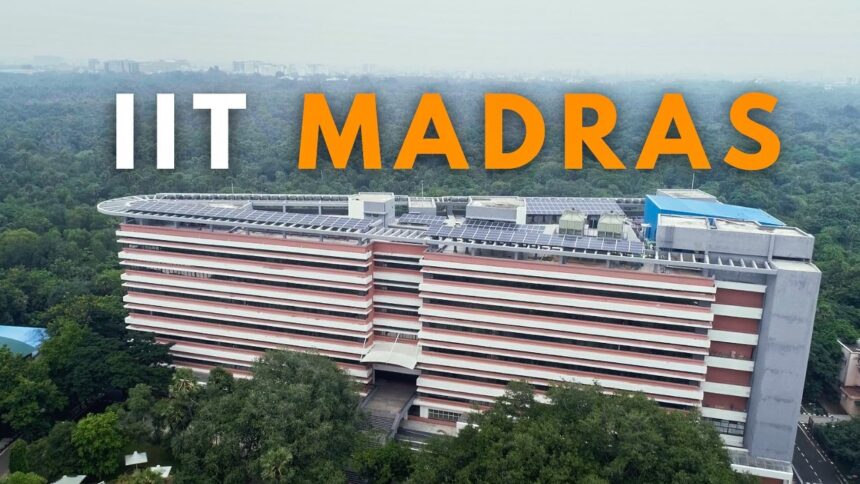
IITMIC has been counted among the most prolific deep-tech startup hubs in India. It has achieved yet another milestone: incubation of over 500 deep-tech startups since its inception. The figure is a reflection of more than a decade of systematic ecosystem development, high-calibre research commercialization, and a strong collaborative network that ties together academia, industry, and investors.
During the years, IITMIC has emerged as one of the most powerful engines propelling technology-driven entrepreneurship in India. From pioneering ventures in artificial intelligence to breakthroughs in climate technology, biotech, med-tech, and advanced manufacturing, the incubation cell has played an instrumental role in shaping India’s deep-tech momentum. This milestone signals not only the strength of the IIT Madras ecosystem but also the country’s rising confidence in science-backed innovation.
A Decade of Building Deep-Tech from the Ground Up
IIT Madras has long had a reputation for high academic and research standards. However, the incubation cell took this legacy a step further by helping students, researchers, and early-stage entrepreneurs convert intellectual output into commercial ventures with real-world impact.
What began as a modest incubation initiative has grown into a full-fledged ecosystem comprising multiple technology centers, namely the IITM Research Park, HTIC, and several sector-specific innovation labs. These units collectively offer state-of-the-art facilities, investor access, mentorship, and testing environments that make it possible for startups to build products that can compete at a global scale.
Driving Nationwide Deep-Tech Impact
Of the 500-plus startups nurtured by IITMIC, many have gone on to become category leaders. Some have filed patents, exported technologies worldwide, and attracted funding from marquee domestic and international venture capital firms.
Collectively, IITMIC startups are contributing across key national priorities, including:
Clean and sustainable energy-from battery technology to electric mobility platforms.
Healthcare and diagnostics-low-cost medical devices, AI-driven diagnostics, and bioengineering solutions.
Aerospace and defense: robotics, UAV systems, and advanced simulation technologies.
Industry 4.0: IoT, automation, predictive analytics, and precision engineering.
Startups from the cell also played crucial roles in government-led innovation missions such as Atmanirbhar Bharat and Digital India, offering home-grown solutions that reduce dependency on imports.
Funding, Growth, and Global Recognition
The funding landscape is another indicator of the success of IITMIC. A large number of the incubated companies have attracted top-tier investors for seed, Series A, and later-stage funding. A number of deep-tech ventures have also garnered global grants and innovation awards. This places IIT Madras in a stronger position among the leading university-run incubation programs of the world.
In particular, the Research Park—often hailed as the “Silicon Valley within a university campus”—has enabled collaboration with large corporates, international research institutions, and technology giants. This has helped the startups gain not just capital, but also access to industrial pilots, product validation programs, and overseas markets.
A Culture that Encourages Experimentation
The most significant strengths that set IITMIC in great stead are perhaps its culture that encourages experimentation, entrepreneurship, and risk-taking, all essential traits in deep-tech but hard to nurture in a conventional academic environment.
The faculty members, alumni founders, and experts from various industries actively mentor budding entrepreneurs to shape prototypes, refine business models, and navigate regulatory landscapes. Multidisciplinary teams that combine engineers, researchers, designers, business strategists, and domain specialists create a fertile ground for breakthrough ideas.
Looking Ahead: The Next Phase of Scaling
Crossing 500 startups was a milestone, but IITMIC does not intend to slow down. The next growth phase shall focus on:
Scaling globally competitive deeptech ventures
Enhancing IP-driven R&D commercialization
Accelerating climate-tech, med-tech, and AI-native solutions.
Bringing more industry partnerships into the Research Park
Expanding access to funding through international investors
As deep tech is believed to lead the next wave of innovation in India, IIT Madras continues to play a leading role in nurturing founders who can build world-class products from India for the world. Conclusion Incubating over 500 deep-tech startups is a milestone that positions IIT Madras Incubation Cell as a national force in research-based entrepreneurship. Beyond numbers, it reflects a rich and vibrant culture of innovation fostered by world-class infrastructure and ecosystem practices of global standards. As the world moves toward deep-tech solutions for its biggest challenges, the role of IITMIC is set to become even more influential in shaping the next generation of Indian technology leaders.