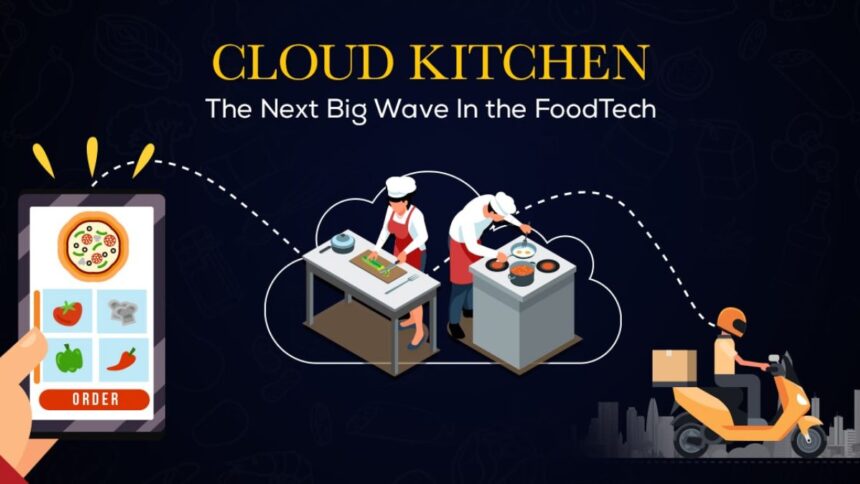
One fast-rising FoodTech startup has unveiled a new generation of smart cloud kitchens to help food businesses change the way they operate in the hugely growing online food delivery market. It leverages data analytics, automation, and technology-driven kitchen management to improve efficiency, reduce operational costs, and enhance consistency in food quality.
Cloud kitchens, otherwise known as ghost kitchens, are on the rise due to lower costs for real estate and a delivery-first business model. Yet, most operators continue to struggle with a myriad of problems: demand forecasting errors, food wastage, inconsistent preparation times, and increasing operating expenses. Newly introduced, the smart cloud kitchen model directly addresses these issues through the use of technology in optimizing every stage of the food preparation and delivery process.
Core to the startup’s offering is an AI-powered kitchen management system that analyzes real-time order data, customer preferences, peak hour trends, and inventory levels. The system uses such information to help kitchen operators forecast demand more accurately, efficiently plan ingredient procurement, and reduce food waste. This data-driven approach improves profitability while supporting sustainability through reduced overstocking of inventory.
Smart cloud kitchens have automated workflows that route orders from food delivery platforms down to kitchen staff for food preparation. The intelligent routing of orders at different cooking stations speeds up the preparation process and will reduce bottlenecks during peak hours. Traditional paper order slips have been replaced with digital screens to enhance the accuracy and coordination among teams in the kitchen.
Some of the high points of this model are the modular kitchen designs. Every cloud kitchen is designed and built to support multiple brands under one roof, hence enabling food entrepreneurs to launch new virtual brands without the investment in separate infrastructure. This flexibility allows for faster experimentation with menus, cuisines, and pricing strategies while helping businesses respond quickly to changing consumer tastes.
The start-up has so far integrated smart inventory and supplier management tools into its platform. Ingredients are tracked in real time, with automated alerts online when stock runs low for operators to replenish them. This ensures continuity in operations while avoiding over-ordering. Partnerships with local suppliers help maintain freshness and minimize supply chain delays.
From a business standpoint, the smart cloud kitchen model drastically cuts entry barriers for restaurant owners and food startups alike. With kitchens on subscription or revenue-sharing models, the startup enables entrepreneurs to focus less on heavy upfront investments and more on branding, food quality, and consumer experience. For sure, this is the model that will charm the small food brands, homegrown chefs, and digital-first restaurant concepts.
The platform also provides performance dashboards that give detailed information on sales, preparation times, customer ratings, and repeat orders. Such insights allow the operators to assess underperforming items in their menu, perfect recipes, and price them properly. Centralized control ensures consistency for multi-location operators across kitchens.
For many experts, smart cloud kitchens are an essential evolution of the FoodTech sector. While food delivery becomes a permanent consumer habit, technology-led kitchen operations are expected to do much of the heavy lifting in food businesses’ effective scaling. Automation and AI-driven insights can help operators manage larger volumes without compromising quality or speed of service.
The startup leadership said it would further plan expanding into new cities, adding robotic cooking to assist with select menu items, and integrating sustainability-focused features such as energy-efficient equipment and waste tracking systems. Further, international expansion has also been considered given the skyrocketing demand for cloud kitchen solutions across the world. With increasing competition in the food delivery ecosystem, smart cloud kitchens have become an attractive opportunity for brands looking to scale, build efficiencies, and drive decision-making based on data. By fusing culinary operations with technology, the FoodTech startup is out to redefine modern kitchens in a digital-first world.