The technology landscape in India is going through one of its most rapid and transformative shifts in recent years. At the heart of this transformation lies three critical forces reshaping global businesses’ ways of operating from India: the rise of Global Capability Centres as innovation engines; the explosive adoption of Generative AI and agentic AI systems; and India’s renewed push toward advanced manufacturing and mobile R&D. Together, these elements are building a new blueprint for India’s tech future-one where the country becomes both the world’s digital talent powerhouse and a growing hub for hardware innovation.
GCCs Become Testbeds for Agentic and Generative AI
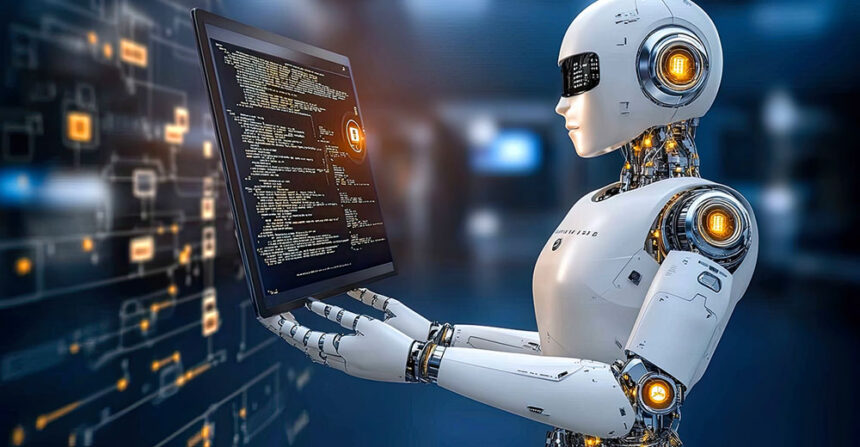
For many years, GCCs, as they were previously known as captive centers, functioned as low-cost back-offices for global firms. That function has now changed dramatically. In the most recent industry surveys, 83% of GCCs in India reported expanding their programs for GenAI, while 58% were already investing in agentic AI, a form of AI capable of autonomous decision-making and independent workflow execution.
This shift points to an important change: India is no longer just a support destination; it is now the prime experimentation zone for AI-driven enterprise innovation.
Companies across banking, healthcare, e-commerce, logistics, and automotive are using their GCCs in India to prototype intelligent systems to automate complex internal processes, reduce operational overhead, enhance analytics capability, and power real-time insights. For many global CEOs, India’s GCC talent pool represents the ideal environment in which “AI-first business models” can be operationalized.
Why India?
A deep technical workforce trained in data, cloud, ML, and AI.
A robust ecosystem of AI start-ups and research institutes.
Faster adoption cycles and willingness to run experimental pilots.
Strong cost advantage relative to the US and Europe.
The result is a surge in enterprise-level AI R&D happening within India’s borders—much of which will eventually scale to global operations.
GenAI Moves From Experimentation to Enterprise Integration
Until recently, Generative AI was mostly used for experimentation-chatbots, content creation, and productivity enhancements. In 2025, however, deep integrations of GenAI across workflows have gained significant momentum within enterprises.
Some major areas of adoption include:
Customer operations: auto-ticketing, dynamic FAQs, and smart response systems.
Software development: AI-powered code generation, testing, and DevOps automation.
Sales and marketing: hyper-personalized content, automated outbound workflows, and lead scoring.
Supply chain: demand forecasting, anomaly detection, and automated vendor communications.
At the enterprise level, GenAI is moving from “assistive” tools to becoming an autonomous co-worker: capable of making micro-decisions, managing processes, and even optimizing operations without constant human intervention.
This directly connects with agentic AI, one of the fastest-growing enterprise tech investments today. Agentic systems don’t just answer queries-they act, based on pre-defined goals. GCCs in India are fast deploying these systems to reduce back-office workload, accelerate business processes, and free human teams up to focus on strategy and innovation.
India’s Manufacturing & Mobile R&D Revolution
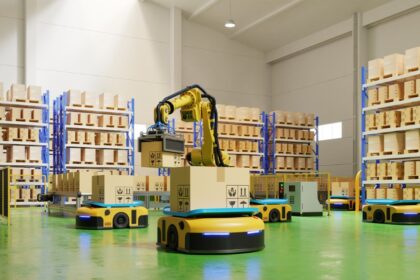
Running alongside the AI boom is India’s accelerating rise up the manufacturing value chain. In the past decade, India has transformed itself from just two mobile-manufacturing units to over 300, catalyzed by large-scale government incentives, the China-plus-one shift, and surging demand from across the world for diversified supply chains.
By 2025, India is not only assembling smartphones; rather, it is emerging as a regional hub for mobile design, component R&D, and hardware innovation.
Global players and emerging Indian brands are investing heavily in:
Semiconductor design centres
Mobile camera and battery R&D
AI-embedded hardware systems
Embedded software and device firmware development
In plain terms, India wants to transition from a purely assembly-driven model to a full-stack hardware innovation economy.
This evolution also opens up new opportunities for startups. As manufacturing and R&D scale, new gaps emerge in areas such as quality automation, robotics, supply-chain tech, predictive maintenance, and hardware-software integration, thus creating fertile ground for deep-tech companies.
The Convergence: A New Era for Indian Innovation
The intersection of AI-heavy GCCs and fast-growing manufacturing capabilities creates an unparalleled opportunity for India. In the process, India is turning out to be that rare hybrid environment where global enterprises can build both digital intelligence (AI) and physical innovation (manufacturing + R&D) at scale.
This convergence means that startups, founders, and enterprises will:
Growing demand for AI-powered enterprise tools
Expanding opportunities in hardware-software solutions
A stronger domestic deep-tech ecosystem Increased investor interest in AI+ manufacturing startups With each passing year of the decade, this combination of GCC innovation, GenAI adoption, and manufacturing growth cements India’s status as a global leader in technology, not just in talent but in industrial capability and strategic innovation.