Chennai-Based Startup Attracts Major Investors
Indian spacetech startup Agnikul Cosmos, which is building the world’s first single-piece 3D-printed rocket engines and end-to-end space transportation solutions, has raised Rs 150 crore in a fresh funding round. The company’s valuation now stands at nearly Rs 4,500 crore.
The funding round included participation from family offices and marquee institutional investors such as Advenza Global Limited, Atharva Green Ecotech LLP, HDFC Bank, Artha Select Fund, Prathithi Ventures, and 100X.VC.
Plans for Expansion and Advanced Space Technology
Agnikul Cosmos plans to use the funds to scale production units for aerospace and rocket components, advance its stage-recovery program, and develop an integrated space campus on the 350 acres allocated by the Tamil Nadu government. The campus will house facilities for manufacturing and testing of launch vehicle systems.
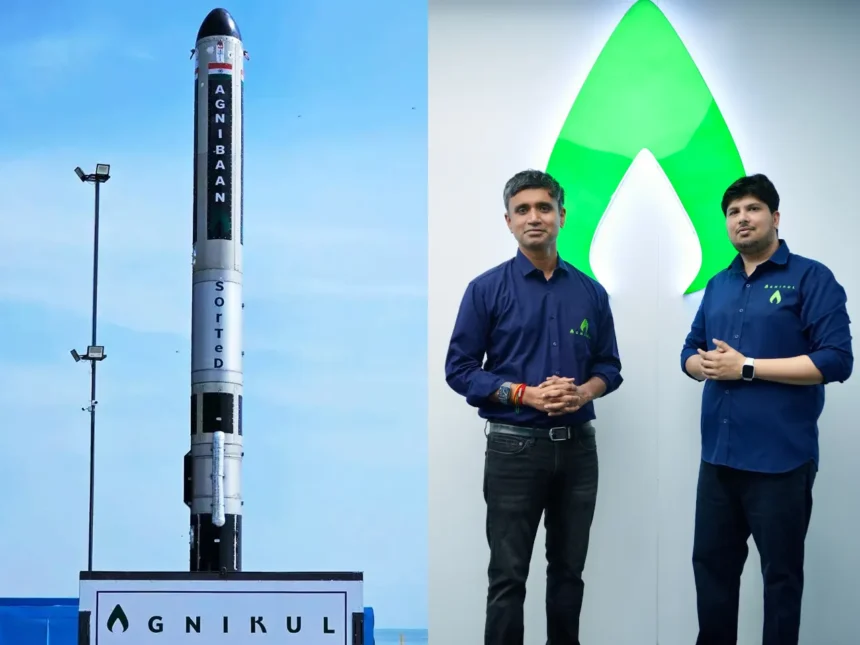
Srinath Ravichandran, CEO and co-founder of Agnikul Cosmos, stated that the company’s previous controlled ascent launch successfully demonstrated its patented technologies with the support of ISRO and IN-SPACe. The new funding will allow the startup to focus on lower stage recovery, upper stage extension, and scaling launch frequency, while positioning the company to provide launch services globally.
Focus on Reusable Launch Architecture
The startup is also strengthening its reusable launch architecture. Agnikul recently received a patent that extends the operational life of upper stages. This innovation paves the way for reusability and cost-efficient orbital access, a critical step toward becoming the world’s first recoverable small-satellite launch vehicle.
Moin SPM, co-founder and COO, emphasized that the combination of 3D-printed engines, patented reusable technology, and a fully integrated production campus sets Agnikul apart from other private space companies.
Investor Confidence in India’s Private Space Sector
Investors are increasingly betting on Agnikul due to the rising potential of India’s private space sector. Companies like Agnikul, Skyroot, and Bellatrix Aerospace are pushing the boundaries of innovation and positioning India as a global player in small-satellite launches.
The funds will help Agnikul scale production, advance stage recovery programs, and improve operational efficiency. The company’s focus on reusable rockets is expected to reduce launch costs and make orbital access more affordable for commercial and scientific missions.
India’s Private Space Revolution
Agnikul’s growth reflects a larger trend in India, where private companies are moving into areas traditionally dominated by government space agencies. By combining 3D printing, reusable launch systems, and integrated production, Agnikul aims to make India a hub for cost-efficient and frequent small-satellite launches.
The startup’s strategy aligns with global trends of lowering launch costs, increasing efficiency, and developing sustainable space technologies. The integrated space campus in Tamil Nadu will allow the company to consolidate all aspects of rocket design, production, and testing under one roof.
The Road Ahead
With Rs 150 crore in new funding, Agnikul is well-positioned to accelerate the development of reusable rockets, increase launch frequency, and expand its technology footprint. The startup’s vision is to build world-class launch capabilities from India while maintaining a focus on cost efficiency and innovation.
The next few years could see Agnikul achieving major milestones in small-satellite launches, reusable rocket technology, and orbital access, making it one of the most exciting ventures in global spacetech.
Agnikul Cosmos represents a new era in India’s private space industry. With 3D-printed rocket engines, reusable launch systems, and a world-class integrated space campus, the startup is poised to redefine small-satellite launches. The latest funding round provides the capital to scale operations, innovate further, and compete on a global level.